01
01 Background
Space Exploration Technologies Corp., doing business as SpaceX, is a private American aerospace manufacturer and space transportation company headquartered in Hawthorne, California. Founded in 2002 by Elon Musk, SpaceX’s stated goal is to reduce the cost of space transportation and enable the colonization of Mars. The company designs, manufactures, and launches the Falcon 9 and Falcon Heavy rockets, and the Dragon spacecraft, which delivers cargo and crew to the International Space Station. SpaceX made history in 2012 as the first private company to dock a spacecraft with the ISS, and in 2020 became the first private company to send astronauts to orbit.[1][2][3]
I had the opportunity to join the Avionics Systems Integration and Test team at SpaceX Headquarters in Hawthorne, California. Our team was responsible for integrating the various avionics systems on the Falcon 9 and Falcon Heavy rockets — bridging the gap between the flight computers, sensor packages, and the vehicle’s mechanical and propulsion systems. I worked on multiple high-impact, interdisciplinary projects spanning flight-grade harness design, hardware-in-the-loop testing, printed circuit board development, and recovery operations support equipment — many of which were deployed across multiple SpaceX sites.
The Falcon 9 Rocket
02
02 Falcon Heavy Harnesses
I designed breakout harnesses for the Falcon Heavy launch vehicle. These Tier 2 harnesses — hardware that interfaces directly with flight components but does not fly — establish power and communications with the vehicle’s flight computers, enabling ground crews to perform vehicle health checkouts on all controllers and downstream systems throughout the vehicle’s lifecycle.
These harnesses supported vehicle checkout activities across manufacturing, test, and launch-site operations.[4][5]
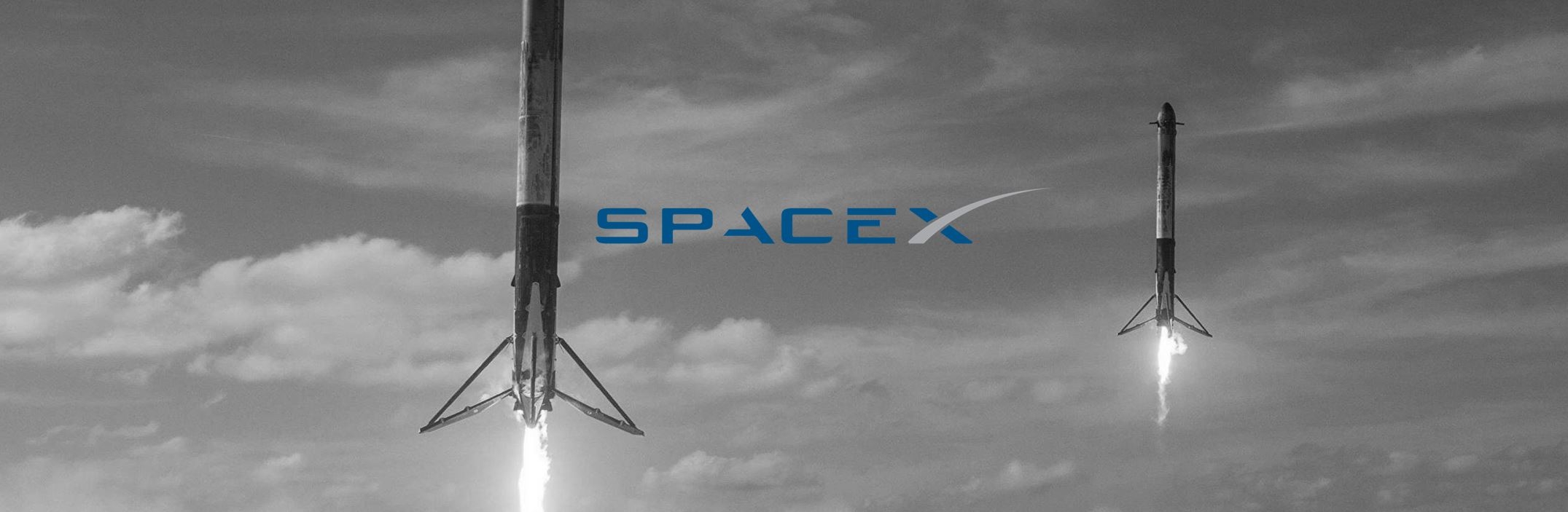
As of early 2026, the Falcon Heavy is the most powerful commercial rocket in the world, generating over 5 million pounds of thrust at liftoff — equivalent to approximately eighteen 747 aircraft at full power. It consists of three Falcon 9 first-stage cores bolted together, creating unique avionics integration challenges for cross-vehicle communication and synchronized booster separation. On February 6, 2018, the first Falcon Heavy launched from Kennedy Space Center’s historic Launch Complex 39A. Rather than the concrete mass simulators typically used on demonstration flights, the payload was Elon Musk’s personal Tesla Roadster with a spacesuit-clad mannequin dubbed “Starman” — a symbolic payload meant to inspire a new generation of space enthusiasts. The two side boosters landed simultaneously at Cape Canaveral in one of the most iconic moments in spaceflight history.[6]
Falcon Heavy Test Flight — featuring the simultaneous booster landing at Cape Canaveral
03
03 Stage Separation Connectors
Approximately two minutes and thirty seconds into flight, the Falcon 9 first stage separates from the second stage. The booster begins its return to Earth while the upper stage ignites its single Merlin Vacuum engine and continues to orbit. This is one of the most critical events during a mission — the mechanical and electrical interfaces between the stages must provide a clean separation plane, disconnecting reliably in extreme thermal and vibration environments.
This was Tier 1 hardware — flight-grade components that go to space. I worked on the stage separation connectors and the harnesses routed through the interstage, the carbon-composite structure that sits on top of the first stage and encloses the Merlin Vacuum engine. The interstage is frequently visible in onboard video during stage separation events. I worked directly with connector manufacturers to improve, deploy, and iterate upon these connectors on the Falcon 9 production line. These were D38999 connectors with backshells, strain reliefs, grounding, gold contacts, and specialized wire and crimps — all verified through automated test equipment for hi-pot, continuity, and shorts testing. A major focus was improving manufacturability, repairability, updating engineering drawings, and critically, reusability — since SpaceX recovers and reflights its boosters, these connectors needed to perform mission after mission.
Falcon 9 Stage Separation — the interstage is visible as the stages pull apart
04
04 Hardware-in-the-Loop Testing
I designed, built, and tested hardware-in-the-loop (HITL) test racks used to electrically simulate every scenario the rocket could encounter in flight. We constructed an engineering buck — essentially the entire rocket minus the metal structure, propellant, and valves — with all of the real wiring, sensors, flight computers, and harnesses at full production length to accurately account for latency, timing, and voltage drop. Every single sensor input, such as gyroscopes, accelerometers, and pressure transducers, was emulated with electrical equipment that reproduced the exact signals those sensors would produce, feeding them directly into the flight computers.
One of the most significant initiatives these racks supported was the qualification of the Automatic Flight Termination System (AFTS). Traditionally, the FAA requires a Range Safety Officer on duty during every launch, ready to send a destruct command if the rocket deviates from its planned trajectory. SpaceX was working to demonstrate that the rocket’s own flight computers could autonomously terminate the mission if something went wrong — eliminating the need for a human in the loop. To earn FAA approval, a comprehensive range of safety-critical and off-nominal failure modes had to be rigorously simulated and proven.[7][8][9]
The test scenarios were exhaustive: sensors installed upside down due to human error, the vehicle exceeding its flight envelope, conflicting sensor data, loss of engines, flight computers producing unexpected outputs, and countless other failure conditions. These HITL racks filled large server cabinets and were a critical part of proving to the FAA that the AFTS could be trusted to make autonomous termination decisions. This work also drove improvements in making the manufacturing process more poka-yoke — designing systems and procedures to prevent human error before it can occur.
After flying in a “shadow” backup mode on several earlier missions to demonstrate reliability, the AFTS flew as the primary flight safety system for the first time on February 19, 2017 — a Falcon 9 launch from Kennedy Space Center’s historic Pad 39A. This was a landmark achievement: it eliminated the need for a human Range Safety Officer in the loop and was a key enabler of SpaceX’s rapidly increasing launch cadence. The HITL racks I designed and built were part of the rigorous qualification effort that made this possible.[7][8][9]
05
05 Data Acquisition Hardware
Every Falcon 9 that rolls off the production line goes through extensive acceptance testing, and SpaceX’s manufacturing cadence demands efficient, reliable test infrastructure. Previously, when a sensor reading was out of specification during production, an engineer would be called to the floor to manually verify and sign off on the hardware. This process stopped production and was not the most efficient approach for rigorous testing and certification.
I investigated the signal path and identified that analog sensor signals were picking up electrically induced noise from nearby high-power equipment on the production floor. The signals were being read by NI PXIe data acquisition hardware, and the noise was corrupting those readings, causing false out-of-spec flags that triggered unnecessary engineering interventions and slowed the manufacturing line.
I designed a high-density data acquisition printed circuit board in Altium Designer with an integrated filtering solution to isolate the sensor signals from the unwanted noise. The design was incorporated into production test infrastructure, reducing downtime, improving manufacturing throughput and signal quality, and minimizing the need for engineering intervention.
Octaweb (Engine) Integration Area[14]
06
06 Recovery Operations
SpaceX pioneered the reuse of orbital-class rocket boosters, routinely landing Falcon 9 first stages on autonomous drone ships at sea (“Of Course I Still Love You” and “Just Read the Instructions”) and on landing zones at Cape Canaveral. After a booster lands, ground crews need to safe the vehicle and establish power and data connections for post-flight processing — and time is critical.[2][10]
Rockets are designed with a fail-safe philosophy. Propellant valves, for example, are designed to fail open — if a valve loses power, fuel continues to flow, the engine keeps burning, and the mission has the best chance of success. But after landing, those same valves need to be powered closed. The booster carries limited battery capacity because every kilogram directly reduces payload-to-orbit performance, so there is a finite window to connect the landed rocket to ground infrastructure before the batteries are depleted and the valves default open. Similarly, ground infrastructure can provide higher bandwidth and more redundant communications links for uploading telemetry back to mission control.
I designed a mobile support rack — the ground support equipment that provides power and communications to the rocket after landing. It connects at the vehicle’s quick-disconnect interface, the same connection point where the rocket normally interfaces with ground infrastructure pre-launch. The rack houses redundant power and communications systems with integrated thermal management, all in a waterproof enclosure rated for the open-ocean conditions on the deck of a drone ship. I created the rack elevation diagrams, selected all components, developed the wiring architecture, and oversaw the build-out and deployment at all recovery sites, where the equipment continues to support Falcon recovery operations today.
Falcon 9 Returning to Port on the Autonomous Spaceport Drone Ship[13]
07
07 Payload Separation Simulator
The final critical event of a mission is payload deployment. After the upper stage reaches its target orbit, the satellite or spacecraft must cleanly separate from the rocket. Historically, many payloads were deployed using explosive bolts — a technology that is inherently difficult to test. You fire one off in a test jig to verify it works, then install a fresh one on the rocket and hope for the same result. This is not a repeatable, high-confidence approach to flying.
Modern payload separation mechanisms like the Lightband use electromechanical systems that uniformly release a spring-loaded payload — devices that can be tested, characterized, and proven before flight.[11][12] However, the flight computers that send the deployment command also need to be verified: the fire signal must have the correct transient behavior, voltage levels, current capacity, load characteristics, and duration to reliably actuate the separation mechanism.
I built a payload separation simulator that precisely modeled the electrical characteristics of the separation device, allowing engineers to characterize and certify that the flight computer’s deploy signal met all requirements. By feeding the actual fire command from the flight computer into my simulator, we could measure and verify every aspect of the signal before integrating with flight hardware — embodying the space industry’s core principle of “test as you fly.”